

The views and opinions expressed in this interview are those of the interviewee and do not necessarily reflect the official policy or position of ICC Academy or ICC.
About the interviewee:
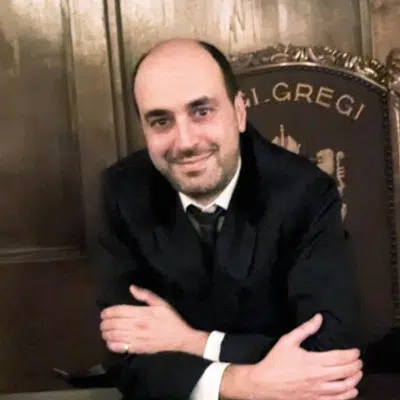
In over two decades in trade finance, Tolga Koc has spent his time mastering the machinery behind it: the documents, the discrepancies, and the systems that must be exactly right before a letter of credit can move.
He started in 2004 as a Junior Specialist at ING Bank Turkey, moved through the management trainee track at Akbank, and relocated to the Netherlands in 2008 to take on a Division Manager role at The Economy Bank. Today, he’s a Director at Anadolubank Nederland, where his remit has grown well beyond documentary credits to cover the bank’s operations, credit, and payments functions. Along the way, he added a Certificate in Digital Trade Strategy (CDTS) to a set of documentary credit qualifications built up over twenty years.
In this interview, Tolga talks about what pushed him to formalise his training and thinking on MLETR, electronic bills of lading, and where trade finance digitalisation is headed, along with the insights he gained from on-the-job training in the last two decades.
Early career in trade finance
Learning the fundamentals of documentary credits on the ground
You began your career in 2004 as a Junior Specialist at ING Bank Turkey before moving into the management trainee track at Akbank. For someone entering a documentary credits role today, what did those early days teach you that formal training tends not to capture?
Being on the job is everything – no formal education can give you that. There’s a real difference between knowing something on paper and knowing it in practice.
I was lucky with my first role: I landed a rich customer portfolio that let me see almost every kind of transaction, from guarantees and cheque issuances to simple payments. A lot of people in this industry only ever see one side of trade finance – they start in collections, say, and do collections all day. I got to see the whole picture early on, and that’s rare. My advice to anyone starting out: always be close to your managers and listen to their conversations. Ask questions – you will learn a lot.
And, once you’ve seen a transaction in practice, go and read the rules behind it. For collections, that means sitting down with the URC 522 and understanding how banks interact with one another.
Seeing the practice first, then reading the rule – that combination is what sticks.
The management trainee programme at Akbank also helped me build the essential banking vocabulary, because school doesn’t teach you banking in that kind of detail. If you get the chance to do a structured trainee track like that, it’s ideal.
Your early work centred on the issuance and processing of commercial documentary credits, where accuracy is paramount. How did you develop the discipline and attention to detail that the role demands?
My years at Akbank were where I specialised in letters of credit, which make up a very big portion of international trade finance. In those early years, I focused on earning the Certificate for Documentary Credit Specialists (CDCS) from LIBF – now Walbrook – which was the most internationally recognised and reliable certification programme at the time. Getting it early in my career helped me combine field expertise with academic knowledge.
Establishing himself in European trade finance
A new market and the move into more complex instruments
In 2008, you relocated to the Netherlands as a Division Manager at The Economy Bank, a BNP Paribas joint venture. What was the most significant adjustment in moving from the Turkish market to a European banking environment?
The culture, without question. The Dutch system is far less hierarchical – even juniors are pulled into decision-making processes, and at first that’s a bit shocking. It’s easy to get used to and at the same time it’s empowering.
In Turkey, banking is very structured: as a junior you input the transaction, but someone more senior – often two people – checks everything before it moves. Here in the Netherlands, someone still checks you, but they give you the room to deal with the transaction and the customer yourself, even early in your career. They also ask for your opinion regardless of how junior you are – you don’t feel like your manager is above you, you can just openly discuss things with them.
Even the small things say something about that culture: in Turkey we’d add a title after someone’s name – “bey” – a bit like “san” in Japanese. In the Dutch system, people just use your name. I don’t think hierarchy is a bad thing. In a bank, you have to do things in a very strict way but it’s good to be heard, even when you’re wrong and your manager corrects you.
Getting the CDCS certificate early also helped me land that job. I’d only been working for about five years when I interviewed with the Dutch bank, and not many people earn that certificate in their first five years – it was a big plus for me.
Much of your experience lies in the more complex end of the trade finance field. What makes that kind of work different from the more routing, day-to-day side of the field?
With more complex transactions, you’re often working somewhere the rules don’t fully reach yet. It’s much more complex than a straightforward transferable LC, and there’s less guidance out there in practice.
I always enjoy working with transactions like that, and I try to teach the juniors on my team how to approach them. It’s not easy to hold all the parties and moving pieces in your head at once – they usually have to go back, re-read it, and properly understand it.
Most of our day-to-day transactions are routine, it’s not rocket science. So, the complex cases are like solving puzzles: they make an everyday job more colourful. It’s fun to work through a different kind of puzzle every time.
Read: ‘ISBP Insights | Avoiding common LC discrepancies’
Moving into leadership
From technical expert to leader of people and processes
You’ve been a Director at Anadolubank Nederland for over a decade, overseeing the end-to-end operational workflow of the operations department. How did your priorities change when you became responsible not just for the work itself, but for the people and processes behind it?
I feel like a mentor now. In the first couple of years of a career, the focus is on educating yourself; in the latter part, you start sharing that expertise with the younger generation.
The role itself grew too. At The Economy Bank I was focused on trade finance operations, but here at Anadolubank, I’m also responsible for credit operations, customer onboarding, and payment operations, which represent a whole different, very detailed world, plus treasury.
Technology keeps shifting underneath all of it: just this past weekend, we migrated our systems for the ECB and SWIFT message-format changes. Seeing all those pieces come together – for example, if I extend credit to a customer, whether it’s an LC or a cash loan, I also need to see the treasury side hedge that exposure – has made me feel much more complete as a back-office person. I’ve never been in the front office, I’ve never dealt directly with customers, but I know a little bit of everything that happens behind the scenes.
Contributing to the profession
Helping to shape and interpret the rules of trade finance
Alongside your role at Anadolubank, you serve as a DOCDEX expert and are a working group member on documentary credits at ICC. How has being involved in the rules of the profession changed the way you approach your own work?
It lets you see things from a broader perspective.
Opinions come into ICC Paris first and get distributed to the working groups in different countries – we give our feedback, and ICC Paris reviews those comments before anything is finalised. Before I was a member, I could only ever see an opinion after it was finalised and published. Now I get to see it, and comment on it, before it goes out. You have a say, and you also start to understand how the rules come together, because it’s the same people establishing and updating them. It’s very enriching at this point in my career.
As a DOCDEX expert, I haven’t been that active yet, but it’s exciting whenever a case comes in – a group of us work through it together and give our opinions. It’s a highly prestigious role, and I’m honoured that ICC gave it to me.
You hold a broad range of credentials. For practitioners considering mid-career certifications, what value have qualifications brought to your work beyond the credentials themselves?
Certifications are a very good way to show that the experience on your resume aligns with the technical expertise your job requires – that can be crucial early in your career, while you’re still looking for opportunities.
But there’s value beyond the credential itself, too. With only solid on-the-job training, you tend to do things a certain way, because that’s simply your bank’s methodology.
When you train under a certification curriculum, you see how other banks – and traders, importers, exporters – see the same rules and the same practice.
You come back with the whole picture, and you combine what you’ve learned with your daily work. Sometimes that lets you improve your own processes, because you realise there’s a better way of doing something within the rules and regulations. It ends up improving your workplace, too.
Engaging with digital trade and the CDTS
Why an established documentary credits expert turned to digital trade
Your career has been built on the document-intensive side of trade finance. What prompted you to pursue the Certificate in Digital Trade Strategy (CDTS) alongside your existing documentary credit qualifications?
Trade finance digitalisation is an inescapable factor; we have to adjust to it sooner or later. That’s what I like about a career in trade finance: it’s never stagnant, it’s always evolving. I’m actively involved in some of the digitalisation commissions at the bank, and this isn’t a near-future thing anymore, it’s already a reality. We don’t want to be behind, and the CDTS certificate let me see the whole picture of where we stand right now. It was the one certificate I didn’t have.

Certificate in Digital Trade Strategy (CDTS)
Read: ‘What a senior international trade finance career looks like’
The CDTS covers a lot of ground, from MLETR and electronic transferable records to interoperability frameworks. As someone who works with these instruments in practice, which areas of the curriculum most influenced your thinking about the direction of trade finance?
The CDTS opened my eyes to just how much work and effort is going into this from so many people, across so many different parts of the sector.
Seeing that effort convinced me it’s going to become the norm sooner than I expected. The challenges are real. I’ve seen the progress of MLETR being integrated into local country laws, and it is progressing, even if it can feel slow. Big banks are the powerhouses pushing to improve their own systems, and that helps the wider trade finance environment. But think of a very small exporter trying to keep up – it’s genuinely hard for them to understand what’s changing and how to adjust their own systems. ICC’s local branches have a role to play there, too, in helping SMEs keep pace.
I think the traditional ways are going to stick around, because we know how to work with them. But it’s exciting to think about the new types of settlement coming – electronic bills of lading, electronic bills of exchange, platforms where you can exchange ownership of goods and money directly. Twenty years ago, trade finance looked the same as it always had. That’s just not true anymore.
Many experienced professionals worry that digitalisation may make their hard-won expertise less valuable. Having completed the CDTS, how do you see the relationship between deep traditional knowledge and digital trade?
There is absolutely nothing to be worried about.
Digital trade cannot exist without traditional knowledge.
We’re already trying to internally integrate some of our older systems with the help of AI, to make them more efficient, but experience can’t just disappear. You still need people on the job telling AI what to do, because AI cannot solve your problems by itself.
You need to regulate the technology you build alongside it, especially in a financial sector that’s regulated as tightly as ours is. New technology brings its own challenges – security, IT, everything – so it must happen step by step.
Some people are sceptical about all this. I believe that we should use the tools at our disposal effectively. Think about email. Before it existed, you’d wait days for a letter to arrive; that was a real technological leap at the time. With email, the answer was just there. It solved a lot of problems. I think we have to look at AI the same way.
Looking ahead
Advice for the next generation of trade finance professionals
Trade finance is evolving in two directions at once, toward both deeper technical expertise and greater digital capability. If you were beginning your career today, how would you balance mastering the fundamentals with building digital fluency?
Balance is the keyword. Never stop learning and improving yourself and always ask questions if there’s even a tiny bit of a transaction or trade you don’t understand.
My advice to juniors is always the same: know the basics and the principles first, because they’re not going away. For instance, Incoterms® rules may get updated, but the rules will always be there. Studying those rules is essential. Once you have them, you can start thinking about how to improve your own workflows.
Digitalisation is already here, so it comes down to being aware of both and combining them – it’s going to be a combination, not a choice.
Certificate in Digital Trade Strategy (CDTS)
For a practitioner hoping to follow a path like yours, what habit or mindset would you encourage them to develop early on?
Always be curious. Ask questions and read anything you can get your hands on in this field. Listen to the people talking around you and keep an eye on the news – what’s happening in shipping, for instance – because as bankers, we’re not operating in isolation.
For a long time, we were isolated in the banking world: we didn’t really understand how exporters, customs, or shipping companies do things, and knowing those things benefits your own job.
In the beginning of your career, it can feel like too much information. But believe me, it all comes together after a while. There’s always something new to learn – I’m still checking the news myself, still reading the technical advisory content that comes out. Being curious is the key, if you want to excel in your field.


